Evaluate the pattern, not the moment
A single session can be distorted by nerves, fatigue, injury, matchups or an unusual shooting day. A useful evaluation collects evidence across skill work, team drills, scrimmages and games before drawing a conclusion.
Tryout decisions and season evaluations are different
The tryout form helps compare players during a limited evaluation window and make roster decisions. This page is for the work after that decision: tracking development, clarifying roles and measuring whether habits improve across the season.
Use the tryout evaluation formBasketball player evaluation criteria
Score what the player can do, how reliably it appears and whether it helps the team. Use the same definitions for every player and every review.
Ball handling
Control under pressure, change of pace, weak-hand confidence and the ability to create an advantage without wasting dribbles.
Shooting
Shot preparation, balance, range, selection and whether mechanics remain dependable at game speed.
Finishing
Touch and body control at the rim, use of both hands, footwork and decisions against help defense.
Passing and decisions
Accuracy, timing, vision and whether the player recognizes the simple read before pressure closes the window.
On-ball and team defense
Stance, containment and closeouts alongside help position, rotations, communication and recovery effort.
Rebounding
Early contact, pursuit outside the player's area, two-hand finishes and the first outlet after possession is secured.
Communication
Useful, early talk on defense and a steady voice that helps teammates organize rather than adding noise.
Effort and motor
Sprint habits, second efforts, transition urgency and whether energy survives mistakes and fatigue.
Basketball IQ
Spacing, timing, off-ball awareness, recognition of score and clock, and anticipation of the next action.
Coachability
Listening, applying feedback, asking useful questions and responding to correction without losing the next possession.
Role execution and team fit
Reliability in assigned responsibilities and the ability to help a lineup function without needing every possession.
Consistency and progress
How often the standard appears, what is improving and whether better habits hold across practices and games.
Use one rating scale consistently
A score only means something when every coach shares its definition. This five-point scale measures current game usefulness, not a player's potential or value as a person.
- 1
Needs instruction
The skill or habit is not yet reliable enough for the current level.
- 2
Developing
The player shows it in controlled work but loses it under pressure or fatigue.
- 3
Functional
The skill or habit usually supports the player's role in normal team situations.
- 4
Reliable
The player consistently performs it at game speed and against pressure.
- 5
Impact strength
The skill or habit changes possessions and makes teammates better.
Combine scores with written observations
Numbers make reviews comparable. Notes explain the number and tell the coach and player what to do next.
- Write what happened, not a label: “found the low help defender twice” is more useful than “good passer.”
- Record the situation — drill, small-sided game, scrimmage or game — so the score has context.
- Use drills to isolate technique and live play to evaluate reads, timing, physicality and transfer.
- Add one development priority and one next action instead of producing a long list of faults.
- Review prior notes before the next evaluation so the follow-up measures the same target.
Review progress throughout the season
Do not let one bad day erase a month of progress or one great game become the entire evaluation. Look for repeated evidence and compare each review with the player's own earlier baseline.
Early season
Set a baseline after the roster settles. Identify the player's likely role and one or two development priorities.
Every 3–4 weeks
Re-score only after enough practices and games provide evidence. Compare observations, not just totals.
Midseason
Discuss progress with the player, clarify role expectations and adjust the development plan.
Late season
Look for habits that now hold under pressure and identify the next offseason priority.
Built for Real Basketball Coaches
Created from the perspective of an active high school basketball coach, this framework is designed for the repeated decisions coaches make in practices, games and player conversations — not a one-time score that gets filed away.
Connect evaluation to the rest of the week
Player development is one part of the season. See how to organize a high school basketball season end to end.
Turn priorities into practice
Use the practice plan framework to build timed drills around the development needs your evaluations reveal.
Practice plan templateObserve under game pressure
Use the game day checklist to prepare the team while noting role execution, decisions and communication in competition.
Game day checklistStill selecting the roster?
Use the separate tryout form when the immediate job is comparing players and making roster decisions.
Tryout evaluation formBasketball Season Planner
Evaluation Should Continue After Tryouts.
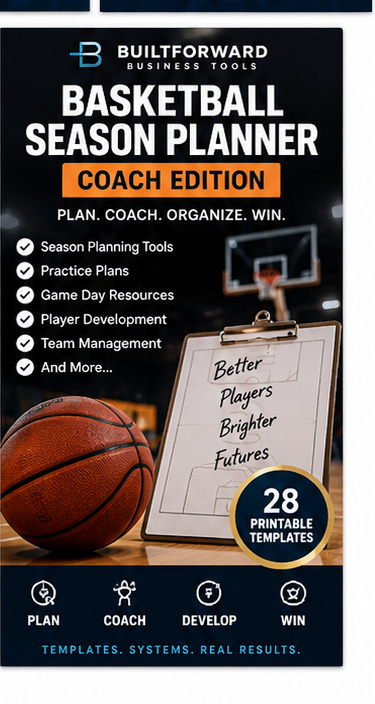
Tracking player development is part of managing the full season. The Basketball Season Planner — Coach Edition helps organize practices, game preparation, notes and the work surrounding each player's progress.
View the Season Planner