The practice plan framework, block by block
Each block below gets a start time, an end time and an objective on the page. Drop the blocks that do not fit the day; keep the order.
Practice goals
Write two or three objectives at the top of the page before any drill is chosen. Everything below has to serve them.
Warm-up and movement prep
Dynamic movement, ball handling on the move, and a short shooting progression that gets hands and legs ready.
Skill development
Individual and small-group work: finishing, footwork, passing reads, closeouts. Highest-energy block of the session.
Team concepts
Offensive spacing, actions and defensive principles taught in parts, then built back to 5-on-5.
Situational work
Score-and-clock scenarios, sideline and baseline out of bounds, press break, last-shot possessions.
Conditioning
Build it into competitive drills where it fits the phase of the season rather than adding lines at the end.
Scrimmage / live play
Live reps with a rule or scoring tweak that reinforces the day's objectives.
Free throws
Shoot them tired, in pairs, with a make requirement — never as an afterthought.
Coach notes
What carried over, who needs a follow-up, and the one thing that starts tomorrow's plan.
Planning a 60, 90 or 120 minute practice
Same structure, different budgets. Short practices earn their value by cutting teaching points, not by rushing every block.
60 minutes
One teaching point
- 8 min warm-up and ball handling
- 15 min skill development
- 12 min team concept of the day
- 15 min live play
- 6 min free throws
- 4 min notes and reset
90 minutes
Two teaching points
- 10 min warm-up and shooting prep
- 20 min skill development
- 20 min team concepts (offense or defense)
- 12 min situational work
- 20 min scrimmage
- 8 min free throws and notes
120 minutes
Full install day
- 12 min warm-up and movement prep
- 25 min skill development
- 30 min team concepts, both ends
- 18 min situational work
- 25 min live play with conditioning built in
- 10 min free throws, notes and finish
Keeping drills tied to objectives
A practice plan is only useful if the drills produce the reps the objective needs. These habits keep the page honest.
- Choose the objective first, then pick drills that produce those reps — not the other way round.
- Time every block on the page and hold to it; overrunning one drill steals the block that mattered most.
- Name the standard for each drill so players know what a good rep looks like.
- Keep one carry-over block from the previous practice so teaching compounds across the week.
- Leave a column for what actually happened — plans are worth more when they are reviewed.
Built for Real Basketball Coaches
Created from the perspective of an active high school basketball coach, this framework is designed to be useful in an actual gym — not just look good on paper.
Before practice comes the roster
Practice planning is one part of the season. See how to organize a high school basketball season for the full order of operations.
If you are still working through tryouts, score every player on the same scale first. The free printable tryout evaluation form covers ball handling, shooting, defense, effort and coachability on one page.
Basketball Season Planner
Plan the season, not just Tuesday.
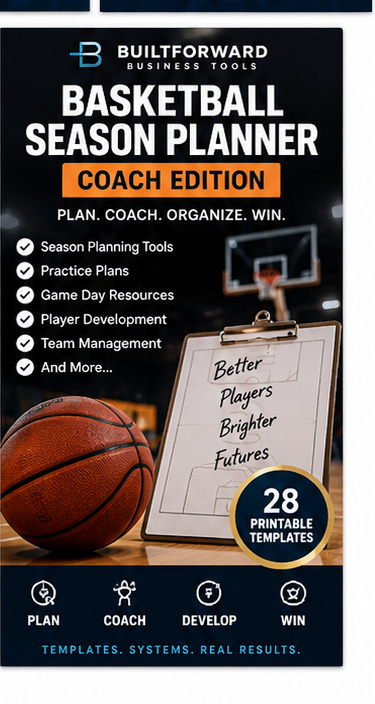
One practice plan is easy. Keeping a whole season organized is the hard part. The Basketball Season Planner — Coach Edition helps organize the work around every practice.
View the Season Planner